
How to Choose the Right Insurance Policy
How to Choose the Right Insurance Policy: A Comprehensive Guide
Choosing the right insurance policy is a foundational element of sound financial planning. It is not merely a legal or administrative requirement; it is a strategic decision that acts as a financial safety net for your future. When you purchase an insurance policy, you are essentially engaging in a sophisticated form of risk management. You pay a relatively small, regular fee, known as a premium, to an insurance company in exchange for their commitment to cover potentially large, uncertain financial losses that may occur in your life or business.
The Fundamental Philosophy of Insurance
To understand how to choose the right coverage, one must first grasp the core meaning of insurance. Insurance is a hedging instrument designed to transfer risk from an individual or an entity to a large financial institution. The insurance company pools the risks of many people, allowing them to compensate those who experience covered losses. Whether it is protecting your physical health, your family’s financial future through life insurance, or your business assets, the goal remains the same: ensuring that a catastrophic event does not lead to financial ruin.
Essential Definitions for Every Policyholder
Before diving into the selection process, it is vital to master the terminology that defines your contract. Understanding these terms prevents confusion when you are comparing different offerings from various insurance carriers.
- Policyholder: The person or entity who owns the insurance contract and pays the premiums.
- Premium: The periodic cost paid to the insurer. This is the “price” you pay for the peace of mind that coverage provides.
- Deductible: The initial amount of a loss that the policyholder must pay themselves before the insurance company’s obligation begins.
- Claim: A formal request made by the insured to the insurance company asking for payment based on the terms of the insurance policy.
- Insurable Interest: The requirement that the insured must have a direct financial relationship with the object or life being insured; you cannot insure something in which you have no stake.
- Coverage Limit: The maximum amount an insurance company will pay for a specific loss or policy period.
Comparison Matrix: What to Look For
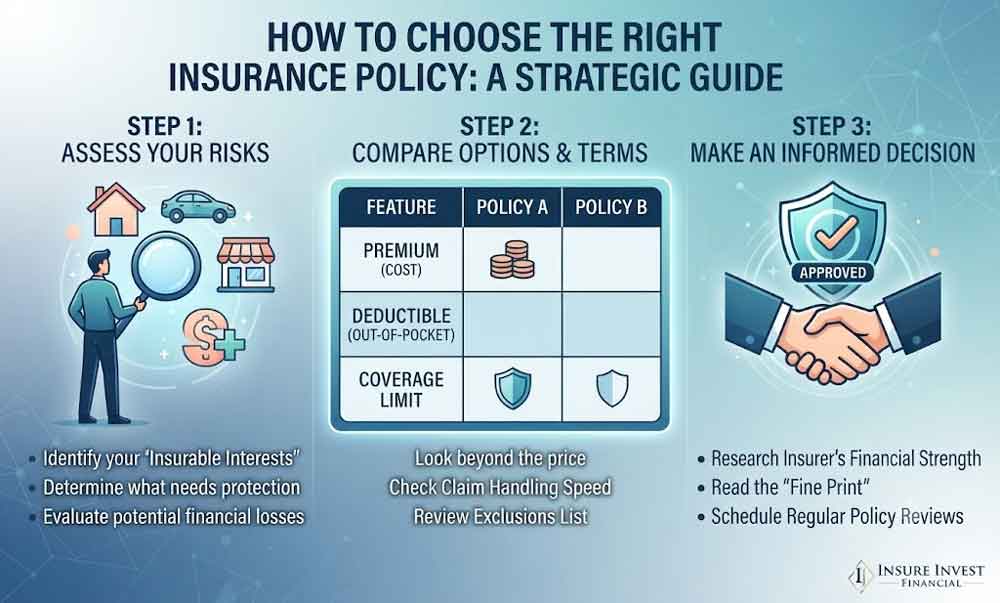
When you are comparing multiple providers, do not rely on price alone. Use the following table to conduct a systematic analysis of the policies you are considering.
| Criteria | What to Assess | Why It Matters |
|---|---|---|
| Claim Handling Speed | How efficient is their claims process? | You need support when you are in distress. |
| Deductible Levels | High vs. Low deductibles | Balances your monthly costs vs. potential out-of-pocket expenses. |
| Exclusions List | What is NOT covered? | Prevents unpleasant surprises during a claim. |
| Financial Strength | Company credit ratings | Ensures the insurer can actually pay your future claim. |
Strategic Steps for Selecting Your Coverage
The process of selecting the right policy should be methodical. Start by identifying your specific “insurable interests.” Are you protecting a car, a house, your professional liability, or your health? Once the focus is clear, calculate your risk appetite. If you prefer financial predictability, a higher premium with a lower deductible might be better. If you have significant savings and want to keep monthly costs down, a higher deductible is often a wise choice.
Additionally, always scrutinize the “fine print” of the policy document. This document details the exact conditions under which the insurer will compensate you. Pay special attention to the renewal terms and whether the policy provides global coverage or is geographically limited.
The Importance of Periodic Reviews
Financial situations are fluid. Your risk profile in 2026 may be vastly different from what it was a few years ago. Marriage, purchasing property, starting a business, or changes in your health status are all triggers that necessitate a formal review of your current insurance portfolio. As your wealth grows and your asset base expands, the coverage limits that were once sufficient may become inadequate, leaving you exposed to significant financial risks.
| Life Event | Recommended Action |
|---|---|
| Marriage | Review life insurance beneficiaries and joint coverage. |
| Buying a Home | Update property insurance for full replacement cost. |
| Starting a Business | Evaluate corporate liability and asset protection. |
| Change in Income | Adjust premium payments and deductible amounts. |
Investing in Peace of Mind
In conclusion, choosing the right insurance policy is an investment in your personal stability. By thoroughly assessing your risks, understanding the technical definitions of your policy, and maintaining an ongoing relationship with a credible insurer, you are taking active steps to hedge against the uncertainties of the future. The effort you put into selecting your insurance today is the protection you will rely on tomorrow.






3 Comments